Friday, February 8, 2013

Larry Fink : Scenes of American Character


“The photograph is an attempt to give the perception of the moment some relationship to immortality.” [1]
-- Larry Fink


Pat Sabatine’s Eighth Birthday Party, PA, 1977, 
cover photograph of Social Graces
When it comes to defining the American experience, photography is often the medium of choice, from the striking Great Depression imagery of Dorthea Lange to the graphic contemporary portraits of Annie Leibovitz.  One such photographer that excels at capturing the American spirit is Larry Fink.  Fink portrays the American lifestyle with a balanced mixture of bitter social commentary and intimate sentimentality.  In his first publication Social Graces, 1984, Fink nostalgically compares the celebrations of varying social classes[2], whereas the artist reveals poignant poverty in America in his 2003 series “Diminishing Returns”, originally published in Vanity Fair and later exhibited at Princeton University[3].  Fink’s oeuvre encompasses a large range of themes and evokes every imaginable emotion. 


Kate Moss, NYC, 1999
Fink was born in Brooklyn, New York in 1941 and began his career as a professional photographer in the 1970s, photographing events of the upper classes, such as museum galas and art openings.  He has gone on to show work regularly in galleries in New York, L.A., and Paris as well as one man shows at the Museum of Modern Art, the Whitney Museum of American Art, and many more both in America and abroad.  He worked as a photographer for Vanity Fair, chronicling celebrity and high society nightlife.  He has also published multiple books, most recently a retrospective collection of works titled Attraction and Desire: 50 Years in Photography[4]. 

Fink often opts for closely cropped, confrontational compositions that press closely into the psyche of his subjects.  Alternatively, he may avoid faces altogether for a voyeuristic style. Black and white is his forte, and he effortlessly manipulates light and dark to isolate subjects from a crowded room and create graphic shapes.  Though he is often recognized for his iconic, glittering imagery of Hollywood, Fink has done projects of every imaginable subject, including beatniks, boxers, working class families, and the occasional presidential candidate, including President Barack Obama and Hillary Clinton.
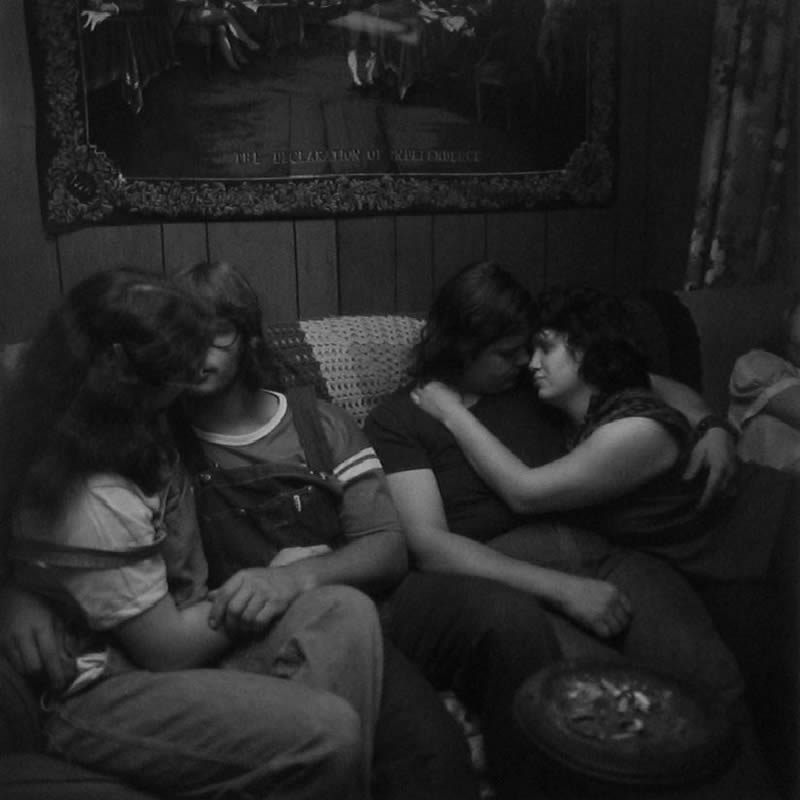

Declaration of Independence, Martin’s Creek PA, 1978,
 “Making Out: 1957-1980”, 
GW Permanent Collection, Gift of Adam J. Rappaport, 2010.
In a New York Times interview Fink commented on his work, “My life is profoundly physical. Photography for me is the transformation of desire" [5].   Certainly this concept presents itself in his series titled “Making Out: 1957-1980”.  In this series, Fink explores the intimate nature of human relationships by capturing personal moments between friends and lovers. In Declaration of Independence, Fink casts light only on faces and body parts, allowing the emotions of his subjects to come to the forefront in tangible form, while the background seems to recede into vague darkness.  The clever inclusion of “Declaration of Independence” banner on the wall behind the subjects’ heads highlights the serie’s themes of American passion.


Larry Fink currently works as a professor of photography at Bard College while continuing his work as an artist, and has educated students there for the past 16 years.  Whether documenting the biggest stars or the smallest basements, Fink’s work is a lively testament to the beauty of the human condition.

Visit Larry Fink’s blog at http://larryfink.blogspot.com/ for updates on his current projects!


[1] Larry Fink, interview by Adriana Teresa, “A Moment with Larry Fink”, New York Times, January 6, 2011, accessed January 25, 2013, http://lens.blogs.nytimes.com/2011/01/06/a-moment-with-larry-fink/.
[2] Larry Fink, “Publications: Intros : Social Graces,” Larry Fink Photography, accessed January 25, 2013, http://www.larryfinkphotography.com/publications_intros.html#socialgraces
[3] Jenny Boyar, “Poignant photos from controversial artist Larry Fink,” The Lafayette, March 11, 2005, accessed January 25, 2013. http://www.thelaf.com/a-e/poignant-photos-from-controversial-artist-larry-fink-1.2517150.
[4] “Biography,” Larry Fink Photography, accessed January 25, 2013, http://www.larryfinkphotography.com/bio.html.
[5] Fink, “A Moment with Larry Fink,” New York Times.

Friday, January 18, 2013

You are Invited...

What did your inauguration invitation look like?  For the lucky people who received invitations to one of the inaugural balls, it’s exciting just being able to attend.  But what would you think if you got this one, to Ulysses S. Grant’s 1869 inauguration reception? 

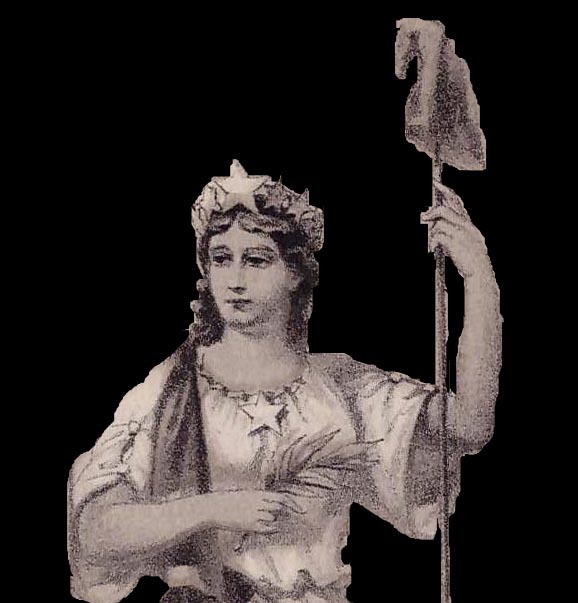
Produced by Philip & Solomon, a Washington, DC printer, it bears images of two female figures with a bust of the newly elected President framing the text along with other objects ranging from a sheaf of wheat to an artist’s palate.  Looking closely at each element of this composition, the elements relay symbolic meaning.  The symbols convey how the General Committee viewed their new leader.

Many of the symbols are common Revolution-era, American emblems.  The figure of a woman to the right wears a crown of stars and holds a staff, topped with a Phrygian cap .  This cap, a symbol of liberty, along with her classical garments denote this woman as Columbia.  She would also gradually become a personification of America.  Her crown of stars is an interesting addition; usually Columbia wears the Phrygian cap or a laurel wreath.  Where did the crown of stars come from?  If you could take the statue off of the top of the Capitol dome, Freedom in War and Peace, for a closer look you might find the answer.  The work was installed in 1863 by Thomas Crawford.  Many casual observers have misidentified this statue as that of a Native American, but it’s actually a female personification of Freedom.  In the original designs, she wore a Phrygian cap, but Jefferson Davis, soon to become President of the Confederacy, objected to the symbol of emancipation and ordered a change.  The cap became a plumed military helmet crested with stars.  This work, having recently been placed on top of the Capitol, is a possible reference for Columbia’s starred headdress in the invitation.[1]

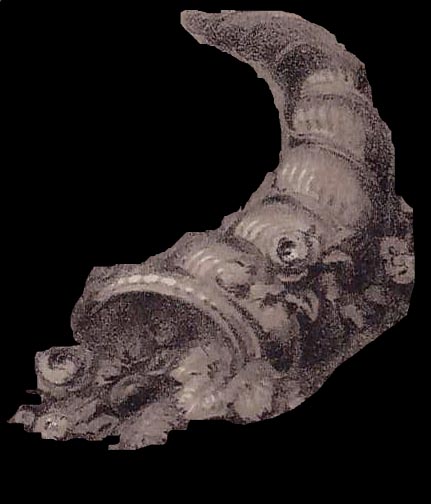
Opposite Columbia is the personification of Victory.  Depicted with wings and holding a palm branch, the Greek goddess Nike sprinkles flowers on the abundant harvest of wheat and pumpkins.  A plow is depicted amid the corn stalks which curl around and in front of a fallen cannon.  A tall ship sails beneath her outstretched arm.  Below Columbia, who came to be known as Lady Liberty, a cornucopia is mixed with papers, books, an artist’s palate and a gavel for a judge.  An image of the Capitol building is depicted behind her.  These images remind me of the John Adams quote “I must study Politicks [sic] and War that my sons may have liberty to study Mathematicks [sic] and Philosophy. My sons ought to study Mathematicks [sic] and Philosophy, Geography, natural History, Naval Architecture, navigation, Commerce and Agriculture, in order to give their Children a right to study Painting, Poetry, Musick [sic], Architecture, Statuary, Tapestry and Porcelaine [sic] (12 May 1780).   Although coming out of a different war from Adams, anyone who saw the end of the Civil War would have looked forward to a time of peace where their children would be able to divert themselves from the images of bayonets and dead soldiers on the battlefield of Antietam.
Atop the text a bust of Grant is crowned with the laurel wreath of victory and is encircled by a flower garland and oak leaves.  Grant’s bust is classically draped to match the other figures and very faintly behind his head is the phrase “Let us have peace.” Coming from when he accepted the Republican Presidential nomination, these four words closed his speech and became the slogan for his campaign.  Anyone who had just survived the Civil War and the assassination of President Abraham Lincoln must have welcomed this idea.  This call for peace must have made even more of an impact since it came from a military commander, the triumphant victor of that war between the North and the South.  All of the images tie together to reinforce the vision of a united country: working the land, creating export items.  With “Columbia” and “Victory” to support the country and their new leader to guide them, these efforts would be rewarded with abundance, learning, and beauty. 


[1] David Hackett Fischer, Liberty and Freedom, (Oxford University Press: New York, 2005), 298-300.

About the Blog

Ipsum Tempor

Sit amet

Covering exhibits at the Luther W. Brady Art Gallery and giving you a peek into the Permanent Collection of the George Washington University.

Ultricies Eget

Coming Soon...

Coming Soon...
Howard Hodgkin: Paintings - May 16, 2012

Friday, February 8, 2013

Larry Fink : Scenes of American Character


“The photograph is an attempt to give the perception of the moment some relationship to immortality.” [1]
-- Larry Fink


Pat Sabatine’s Eighth Birthday Party, PA, 1977, 
cover photograph of Social Graces
When it comes to defining the American experience, photography is often the medium of choice, from the striking Great Depression imagery of Dorthea Lange to the graphic contemporary portraits of Annie Leibovitz.  One such photographer that excels at capturing the American spirit is Larry Fink.  Fink portrays the American lifestyle with a balanced mixture of bitter social commentary and intimate sentimentality.  In his first publication Social Graces, 1984, Fink nostalgically compares the celebrations of varying social classes[2], whereas the artist reveals poignant poverty in America in his 2003 series “Diminishing Returns”, originally published in Vanity Fair and later exhibited at Princeton University[3].  Fink’s oeuvre encompasses a large range of themes and evokes every imaginable emotion. 


Kate Moss, NYC, 1999
Fink was born in Brooklyn, New York in 1941 and began his career as a professional photographer in the 1970s, photographing events of the upper classes, such as museum galas and art openings.  He has gone on to show work regularly in galleries in New York, L.A., and Paris as well as one man shows at the Museum of Modern Art, the Whitney Museum of American Art, and many more both in America and abroad.  He worked as a photographer for Vanity Fair, chronicling celebrity and high society nightlife.  He has also published multiple books, most recently a retrospective collection of works titled Attraction and Desire: 50 Years in Photography[4]. 

Fink often opts for closely cropped, confrontational compositions that press closely into the psyche of his subjects.  Alternatively, he may avoid faces altogether for a voyeuristic style. Black and white is his forte, and he effortlessly manipulates light and dark to isolate subjects from a crowded room and create graphic shapes.  Though he is often recognized for his iconic, glittering imagery of Hollywood, Fink has done projects of every imaginable subject, including beatniks, boxers, working class families, and the occasional presidential candidate, including President Barack Obama and Hillary Clinton.


Declaration of Independence, Martin’s Creek PA, 1978,
 “Making Out: 1957-1980”, 
GW Permanent Collection, Gift of Adam J. Rappaport, 2010.
In a New York Times interview Fink commented on his work, “My life is profoundly physical. Photography for me is the transformation of desire" [5].   Certainly this concept presents itself in his series titled “Making Out: 1957-1980”.  In this series, Fink explores the intimate nature of human relationships by capturing personal moments between friends and lovers. In Declaration of Independence, Fink casts light only on faces and body parts, allowing the emotions of his subjects to come to the forefront in tangible form, while the background seems to recede into vague darkness.  The clever inclusion of “Declaration of Independence” banner on the wall behind the subjects’ heads highlights the serie’s themes of American passion.


Larry Fink currently works as a professor of photography at Bard College while continuing his work as an artist, and has educated students there for the past 16 years.  Whether documenting the biggest stars or the smallest basements, Fink’s work is a lively testament to the beauty of the human condition.

Visit Larry Fink’s blog at http://larryfink.blogspot.com/ for updates on his current projects!


[1] Larry Fink, interview by Adriana Teresa, “A Moment with Larry Fink”, New York Times, January 6, 2011, accessed January 25, 2013, http://lens.blogs.nytimes.com/2011/01/06/a-moment-with-larry-fink/.
[2] Larry Fink, “Publications: Intros : Social Graces,” Larry Fink Photography, accessed January 25, 2013, http://www.larryfinkphotography.com/publications_intros.html#socialgraces
[3] Jenny Boyar, “Poignant photos from controversial artist Larry Fink,” The Lafayette, March 11, 2005, accessed January 25, 2013. http://www.thelaf.com/a-e/poignant-photos-from-controversial-artist-larry-fink-1.2517150.
[4] “Biography,” Larry Fink Photography, accessed January 25, 2013, http://www.larryfinkphotography.com/bio.html.
[5] Fink, “A Moment with Larry Fink,” New York Times.

Friday, January 18, 2013

You are Invited...

What did your inauguration invitation look like?  For the lucky people who received invitations to one of the inaugural balls, it’s exciting just being able to attend.  But what would you think if you got this one, to Ulysses S. Grant’s 1869 inauguration reception? 

Produced by Philip & Solomon, a Washington, DC printer, it bears images of two female figures with a bust of the newly elected President framing the text along with other objects ranging from a sheaf of wheat to an artist’s palate.  Looking closely at each element of this composition, the elements relay symbolic meaning.  The symbols convey how the General Committee viewed their new leader.

Many of the symbols are common Revolution-era, American emblems.  The figure of a woman to the right wears a crown of stars and holds a staff, topped with a Phrygian cap .  This cap, a symbol of liberty, along with her classical garments denote this woman as Columbia.  She would also gradually become a personification of America.  Her crown of stars is an interesting addition; usually Columbia wears the Phrygian cap or a laurel wreath.  Where did the crown of stars come from?  If you could take the statue off of the top of the Capitol dome, Freedom in War and Peace, for a closer look you might find the answer.  The work was installed in 1863 by Thomas Crawford.  Many casual observers have misidentified this statue as that of a Native American, but it’s actually a female personification of Freedom.  In the original designs, she wore a Phrygian cap, but Jefferson Davis, soon to become President of the Confederacy, objected to the symbol of emancipation and ordered a change.  The cap became a plumed military helmet crested with stars.  This work, having recently been placed on top of the Capitol, is a possible reference for Columbia’s starred headdress in the invitation.[1]

Opposite Columbia is the personification of Victory.  Depicted with wings and holding a palm branch, the Greek goddess Nike sprinkles flowers on the abundant harvest of wheat and pumpkins.  A plow is depicted amid the corn stalks which curl around and in front of a fallen cannon.  A tall ship sails beneath her outstretched arm.  Below Columbia, who came to be known as Lady Liberty, a cornucopia is mixed with papers, books, an artist’s palate and a gavel for a judge.  An image of the Capitol building is depicted behind her.  These images remind me of the John Adams quote “I must study Politicks [sic] and War that my sons may have liberty to study Mathematicks [sic] and Philosophy. My sons ought to study Mathematicks [sic] and Philosophy, Geography, natural History, Naval Architecture, navigation, Commerce and Agriculture, in order to give their Children a right to study Painting, Poetry, Musick [sic], Architecture, Statuary, Tapestry and Porcelaine [sic] (12 May 1780).   Although coming out of a different war from Adams, anyone who saw the end of the Civil War would have looked forward to a time of peace where their children would be able to divert themselves from the images of bayonets and dead soldiers on the battlefield of Antietam.
Atop the text a bust of Grant is crowned with the laurel wreath of victory and is encircled by a flower garland and oak leaves.  Grant’s bust is classically draped to match the other figures and very faintly behind his head is the phrase “Let us have peace.” Coming from when he accepted the Republican Presidential nomination, these four words closed his speech and became the slogan for his campaign.  Anyone who had just survived the Civil War and the assassination of President Abraham Lincoln must have welcomed this idea.  This call for peace must have made even more of an impact since it came from a military commander, the triumphant victor of that war between the North and the South.  All of the images tie together to reinforce the vision of a united country: working the land, creating export items.  With “Columbia” and “Victory” to support the country and their new leader to guide them, these efforts would be rewarded with abundance, learning, and beauty. 


[1] David Hackett Fischer, Liberty and Freedom, (Oxford University Press: New York, 2005), 298-300.

Labels

Lorem ipsum

.

Lorem ipsum

Recent News

About

Washington, District of Columbia, United States
"Found In Collection" or simply "FIC" is the way many museums classify the more mysterious items in their possession that have little or no documentation. Here at the Luther W. Brady Art Gallery of the George Washington University, we do keep extensive records of our collection, but some of the items we come across in academic buildings or our own storage can leave us wondering. This blog is an effort to showcase some of the more curious examples and their stories, and to provide a glimpse of the great variety of art pieces within the collection. To learn more about the Brady Gallery's history, recent exhibitions, or the George Washington University, take a look at the links below.

Followers